

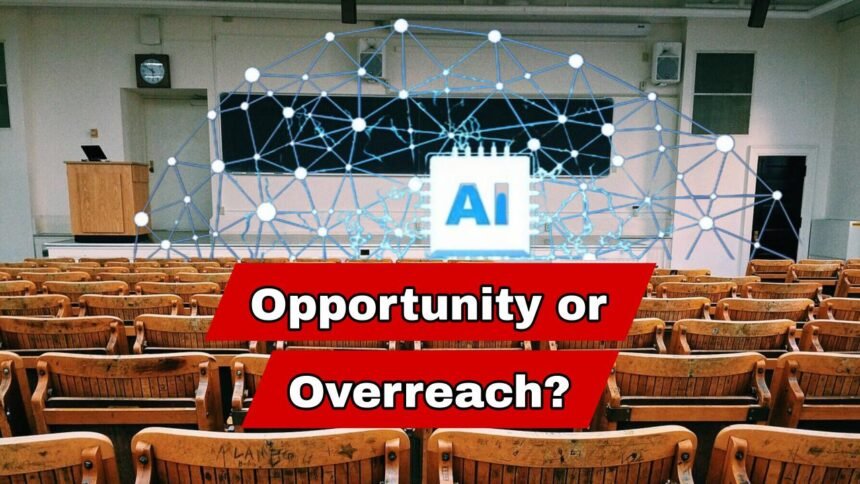
When Microsoft announced it would bring free AI tools to every public classroom in Washington State, it sounded like the start of a new digital revolution. But behind the applause, a deeper question emerged, what happens when artificial intelligence becomes part of how children learn?
At a launch event at Microsoft’s Redmond headquarters, company president Brad Smith framed the move as a way to close what he called an “opportunity gap.” The new program, Microsoft Elevate Washington, will give AI-powered Copilot Studio and Copilot Chat access to all 295 public school districts and 34 community and technical colleges, free for the next few years. For Microsoft, it’s an unprecedented investment in its home state; for educators, it’s a test of how far technology can go before it starts to define the learning itself.
The Classroom Becomes a Testing Ground
Over the next two years, high-school students will use Copilot Chat and Microsoft 365 apps with built-in AI features, while teachers receive bootcamps and digital-training support. On the surface, it’s a big leap toward equality, ensuring every student, from Seattle to rural eastern counties, has access to the same advanced tools.
But it also turns classrooms into early laboratories for what AI-powered learning might look like. Supporters believe it will help personalize lessons, reduce paperwork, and give teachers more time to actually teach. Critics warn it could make students dependent on AI prompts instead of their own thinking.
“We can’t slow down the use of AI, even if we wanted to,” Smith said. “The challenge now is to catch up, responsibly.”
Opportunity or Overreach?
For Microsoft, the move fits neatly into its broader $4 billion Elevate initiative, a global effort to pair AI development with social impact. Yet timing matters. The company has laid off thousands this year while simultaneously pouring billions into AI integration, raising questions about the true balance between philanthropy and strategy.
To its credit, Microsoft isn’t dictating how educators should use AI; the company is funding training, forming partnerships with local agencies, and offering consulting grants to help schools adapt. Still, the presence of tech inside education always carries risk. Once AI becomes the invisible assistant in every student’s notebook, the definition of “learning” itself begins to shift.
Also Read: Sam Altman’s AI College Could Redefine What Education Means.
A Future Written in Code
AI is no longer a futuristic concept to students, it’s becoming their daily tool. Whether it teaches creativity or convenience remains to be seen. For some, Microsoft’s new plan represents progress; for others, it’s a reminder that the classroom might be changing faster than society can decide what’s right.
One thing is clear: education is no longer catching up to technology, technology is rewriting education in real time.
Also Read: Sam Altman Says He’s Jealous of Today’s Dropouts — Here’s Why.