
For years, Meta has dominated the world of virtual reality. Its Quest headsets turned VR from a niche into a household term. But lately, even Meta’s momentum is fading. Shipments have slowed, interest is cooling, and the once-exciting headset market feels like it’s waiting for its next revolution.
And that revolution may already be coming, not from Meta, but from Apple.
Apple’s Focus Moves From Headsets to Glasses
After making waves with the Vision Pro, Apple appears to be rethinking its strategy. Insiders say the company’s future lies not in heavy, high-priced headsets but in lightweight, AI-enhanced glasses designed for everyday life.
The logic is simple: people don’t want to wear technology, they want it to disappear. And AI-powered smart glasses could do exactly that, blending advanced computing into something as natural as a morning walk.
Also Read: How People Are Getting Into OpenAI’s Viral Sora 2 App.
Why Meta Should Worry
Meta’s Quest 3 may rule the VR space today, but Apple’s rumored move toward AR glasses could shift the balance of power. Meta’s own Ray-Ban AI glasses are gaining traction, yet they remain limited, mostly an extension of social media, not a standalone platform.
Apple’s advantage lies in its ecosystem. The same devices people already use, iPhones, Macs, AirPods, can become natural extensions of AR glasses. If Apple can connect these experiences seamlessly, it won’t just compete with Meta’s VR world; it could replace it.
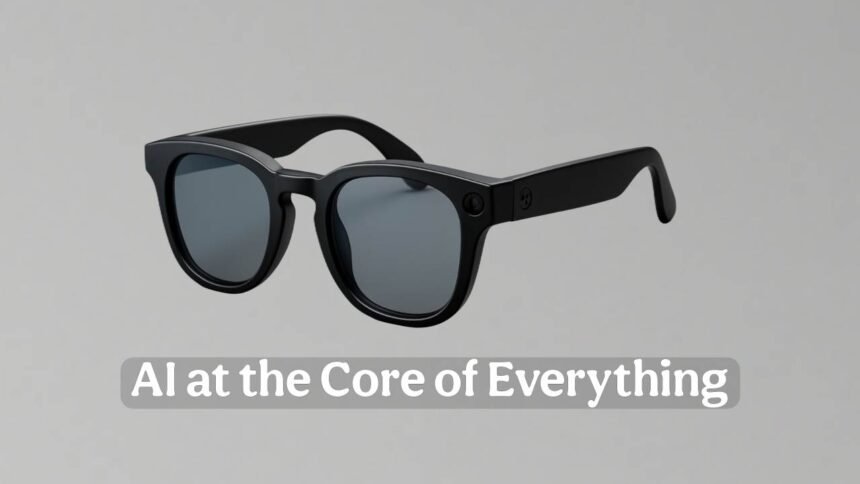
AI at the Core of Everything
The next generation of smart glasses isn’t just about visuals. It’s about intelligence. Apple’s investment in on-device AI processing could enable real-time translation, spatial awareness, and personalized digital assistance, without constant cloud connection.
Meta’s approach, on the other hand, still leans heavily on data-driven social experiences. Apple’s privacy-first AI ecosystem could attract professionals, creators, and general users who want smarter tools without constant surveillance.
The Future of Wearables
If Apple delivers what leaks suggest, lightweight AR glasses that look like normal eyewear but think like an iPhone, the future of computing could shift from screens to sight.
And if that happens, Meta’s headsets might suddenly feel like relics of an older era.
Also Read: Is Apple’s Vision Pro 2 About to Redefine Mixed Reality — or Repeat Its Past?.