
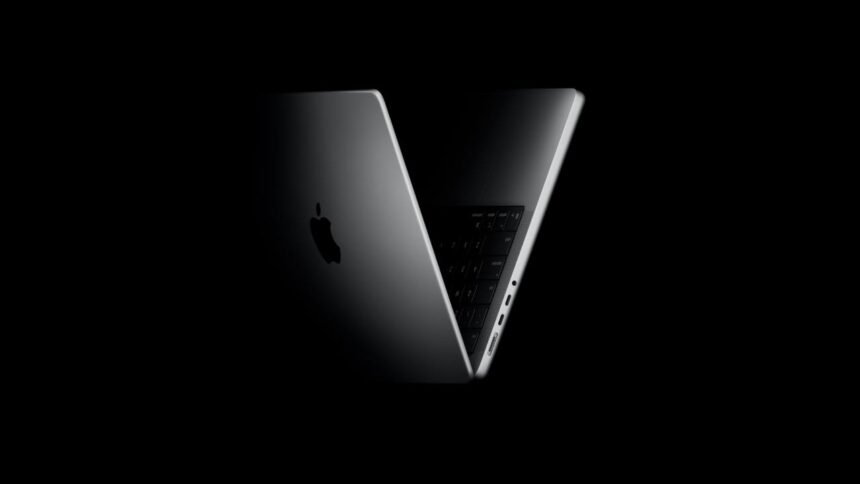
Apple has officially unveiled the new 14-inch MacBook Pro powered by its M5 chip, marking what the company calls the next big leap in AI performance on the Mac. The laptop combines a redesigned Neural Engine, faster GPU, and record-breaking efficiency — all starting at $1,599 in the U.S. ($1,499 with education pricing).
A Huge Step Forward for On-Device AI
The M5 chip introduces a 10-core GPU with a Neural Accelerator in every core, delivering up to 3.5× faster AI performance than the previous M4 generation and up to 6× faster than the M1. With a faster CPU, enhanced Neural Engine, and 150GB/s unified memory bandwidth, the new MacBook Pro handles everything from creative workflows and app development to running large language models (LLMs) locally — without needing cloud processing.
Apple says users can expect up to 24 hours of battery life, nearly four hours longer than the M1 model. SSD performance has also doubled, helping professionals move massive RAW files and export 4K videos with ease.
Tim Cook on X: “The Next Big Leap in AI Performance”
Apple CEO Tim Cook shared his excitement about the release, writing on X (formerly Twitter):
“Amazing performance. Extraordinary battery life. Introducing the all-new 14-inch MacBook Pro with M5, delivering the next big leap in AI performance on the Mac.”
Cook’s statement underscores Apple’s strategy to make on-device AI the core of its ecosystem — faster, more secure, and less dependent on cloud services.
Also Read: Apple’s M5 Chip Redefines the MacBook, iPad, and Vision Pro — Here’s What Really Changed.
Power Meets Efficiency
The new M5 chip features what Apple calls the world’s fastest CPU core, improving multitasking and responsiveness across the system.
In real-world use:
- Video editing in apps like Adobe Premiere Pro is up to 7.7× faster than on the M1.
- 3D rendering in Blender sees up to 6.8× faster performance.
- Gaming frame rates are up to 3.2× higher, making the M5 MacBook Pro a legitimate contender for graphics-intensive tasks.
Developers compiling code in Xcode will notice up to 2× faster builds, and machine-learning engineers running local models in tools like LM Studio can expect dramatically shorter processing times.
macOS Tahoe and Apple Intelligence
Preloaded with macOS Tahoe, the M5 MacBook Pro fully supports Apple’s new Apple Intelligence suite — privacy-centric AI tools that handle everything from live translation to image generation directly on device.
The OS also introduces a cleaner “Liquid Glass” design, smarter Spotlight search, and upgraded Continuity features that now let users make phone calls straight from their Mac.
Apple Intelligence expands into Messages, FaceTime, and the Phone app with Live Translation, and developers can now build custom features using Apple’s Foundation Model framework.
For Upgraders: A Serious Jump in Power
Apple claims the M5 generation delivers up to 86× faster AI performance compared to Intel-based MacBooks and up to 6× faster than the M1. It also adds fast-charge support, reaching 50% battery in 30 minutes with a 96W adapter.
The display remains a highlight: a 14-inch Liquid Retina XDR panel with 1600-nit peak HDR brightness, available with a nano-texture glass option. A 12-MP Center Stage camera, studio-grade mics, and a six-speaker Spatial Audio system complete the setup.
Sustainable, Powerful, and Ready to Ship
In line with Apple’s 2030 carbon-neutral plan, the M5 MacBook Pro uses 45% recycled materials, including 100% recycled aluminum, rare earths, and cobalt. Packaging is entirely fiber-based and recyclable.
Pre-orders are open now on apple.com, with deliveries beginning October 22.
It’s available in Space Black and Silver, with up to 4 TB SSD configurations for professionals who need serious speed and capacity.
Price and Availability (U.S.)
- MacBook Pro 14-inch (M5) — Starting at $1,599 USD
- Education pricing: $1,499 USD
- Pre-orders: Now open
- Availability: October 22, 2025
- Colors: Space Black / Silver
The M5-powered MacBook Pro represents Apple’s boldest step yet toward an AI-native future. By keeping intelligence on device, Apple isn’t just chasing performance — it’s redefining how personal computing evolves.
For users, that means speed, battery life, and privacy like never before.
Also Read: Honor’s New ‘Robot Phone’ Has a Moving Camera — And It Might Change Smartphone Design Forever.