

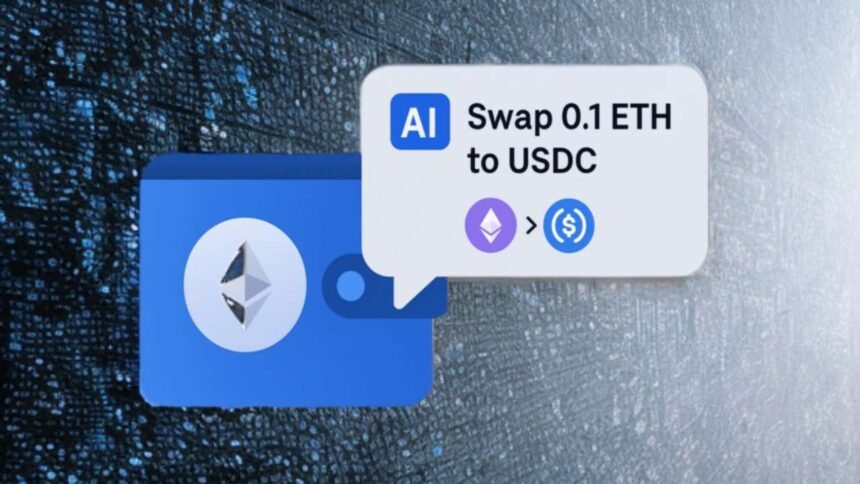
According to multiple venture-tracking reports, nearly $2 billion has already flowed into AI-linked crypto startups in 2025, following last year’s record $2.5 billion. From trading bots to decentralized AI agents, founders are pitching a future where blockchains and artificial intelligence finally meet, and anyone, not just developers, can interact on-chain through natural-language commands.
Maxim Legg, CEO of blockchain-infrastructure firm Pangea, calls it “the next interface layer.” He believes AI will remove the technical barrier that keeps ordinary users out of decentralized finance. If it works, crypto could finally feel as simple as chatting with an assistant.
Money Flows, but Products Lag Behind
The optimism is contagious, tokens tied to AI narratives have jumped 14 percent in the past month, lifting the total market cap for “AI coins” above $35 billion.
Yet critics say that behind the numbers, tangible results are thin.
Many projects promise “autonomous agents” that can trade, lend, or invest on behalf of humans, but most still fail outside demo environments. As Nick Emmons of Allora Labs notes, “The set of ways these systems can go wrong is practically infinite. They can misread data, misprice risk, or simply lose funds altogether.”
And when an AI misfires on-chain, there’s no refund button. The finality of blockchain means a single wrong transaction can burn real assets instantly.
Even supporters admit the experience gap is glaring.
Centralized AI tools like ChatGPT or Gemini offer speed and polish; decentralized AI products are slower and clunkier. “It raises the bigger question,” says Glider co-founder Brian Huang. “Do users actually care about decentralization if it makes everything harder to use?”
Meanwhile, the numbers reveal perspective: despite the buzz, AI-crypto funding still represents barely 1 percent of total AI investment this year, most capital still goes to giants like OpenAI, Anthropic, and Nvidia.
What Would Real Progress Look Like
Analysts say 2026 will decide whether AI-crypto is more than branding.
The sector needs auditable agents, built-in safety layers, and real consumer applications beyond trading, things like remittances, subscriptions, or micro-payments that everyday people already understand.
If AI can truly simplify those workflows, not just speculate on them, it might finally give crypto its long-promised mainstream moment.
Until then, investors have funded potential, not proof. The hype machine is running hot; the innovation engine still needs to start.
Also Read: Can Google’s AI Really Save Search — or Quietly Replace It?.