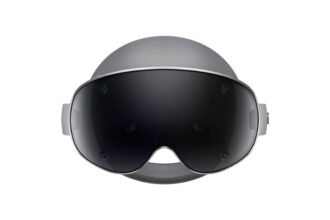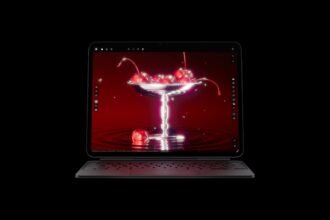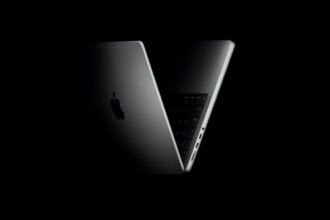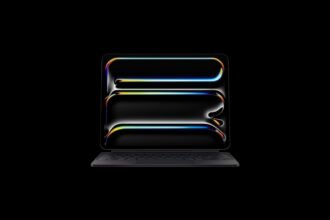


Apple dropped one of its most powerful hardware updates this year — three flagship devices running on its brand-new M5 chip. The refreshed MacBook Pro, iPad Pro, and Vision Pro now come with the company’s fastest-ever processor, promising major gains in speed, AI-driven performance, and battery efficiency.
The lineup is already open for preorder in most regions, with deliveries starting October 22 — just in time for the U.S. holiday season.
What’s New Inside the M5 Chip
According to Apple, the M5 delivers four times the peak compute power compared to the M4.
Johny Srouji, Apple’s Senior VP of Hardware Technologies, called it a “huge leap for AI workloads,” signalling that Apple is gearing up to make on-device artificial intelligence a core part of its ecosystem.
The company says the new chip also improves thermal efficiency and GPU rendering, which should make creative workflows — from video editing to 3D modeling — significantly faster.
Also Read: Honor’s New ‘Robot Phone’ Has a Moving Camera — And It Might Change Smartphone Design Forever.
Familiar Designs, Faster Brains
MacBook Pro (starting $1,599): The 14-inch model gets the M5 treatment, making it Apple’s most capable laptop yet for AI-based photo and video tools.
iPad Pro (11-inch starting $999): Slimmer, more powerful, and now tuned for real-time AI features like enhanced camera guidance and creative apps.
Vision Pro ($3,499): Apple’s futuristic headset gets a comfort redesign with a Dual Knit Band and upgraded visionOS 26, supporting new spatial-computing apps and immersive Apple TV+ content.
Apple says these devices mark the next step toward its “AI-native future” — where hardware and software evolve together instead of separately.
Apple’s fall hardware cycle traditionally feeds into its strongest quarter, boosted by holiday demand. This time, the company has already rolled out the iPhone 17 and Apple Watch Series 11, and now it’s adding the MacBook, iPad, and Vision Pro updates to the mix.
While the iPhone still drives nearly half of Apple’s $45 billion quarterly revenue, Mac and iPad sales are rebounding — up 15 % and 8 % respectively — giving the company more reasons to double down on the M-series ecosystem.
Beyond incremental upgrades, this launch underscores a bigger shift:
Apple is betting that on-device AI — not cloud AI — will define the next wave of consumer tech.
By controlling its own chips, software, and ecosystem, the company aims to compete with Microsoft, Nvidia, and Google on its own terms.
For users, it means faster processing, better privacy, and longer device lifespans.
For Apple, it’s the foundation of the next decade of innovation.
Also Read: BlackRock & Nvidia Lead $40B Team to Acquire AI Data Center Firm.