

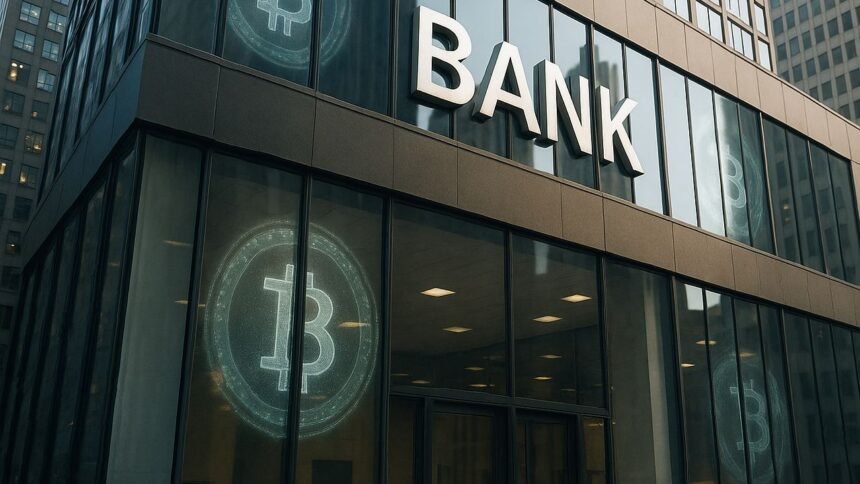
A New Signal from Wall Street
When a 200-year-old institution like Citi starts building infrastructure for cryptocurrency custody, it signals more than a passing experiment — it marks a philosophical shift on Wall Street. “It’s not about speculation anymore — it’s about integration.”
For decades, the world’s biggest banks stayed on the sidelines while retail investors rode the crypto waves. But now, after years of volatility and regulatory uncertainty, the tide is turning. Citi’s upcoming digital-asset custody service, set for a 2026 rollout, could quietly redefine how traditional finance interacts with blockchain.
The shift comes as U.S. policymakers establish a friendlier regulatory environment for digital assets under the new GENIUS Act, giving traditional banks the legal clarity they long lacked.
Crypto is no longer being treated as a rebel market. Instead, it’s becoming part of the regulated backbone of finance — a space where banks can offer the same security and compliance standards that protect trillions in conventional assets.
Inside Citi’s 2026 Plan
Citi’s crypto-custody initiative has been in quiet development for nearly three years. The bank aims to hold clients’ native cryptocurrencies — such as Bitcoin or Ethereum — using a hybrid model: partly in-house technology, partly via specialized third-party partners.
For institutional investors, that means familiar security and reporting frameworks paired with blockchain accessibility. It could make the safekeeping of crypto feel as normal as storing stocks or bonds.
Also Read: California Just Drew the First Line Between Humans and AI.
A Broader Movement Across Wall Street
Citi isn’t alone. JPMorgan is experimenting with deposit tokens; Bank of America is designing stablecoins; and Goldman Sachs is exploring blockchain settlement systems.
Together, these moves mark a slow but deliberate convergence of traditional banking and decentralized finance. The goal is not hype, but infrastructure — systems capable of moving money globally, 24 hours a day, without friction or delays.
What Could Come Next
Citi executives have hinted that stablecoins could become useful in markets where banking infrastructure is weak. For global corporations operating in such regions, on-chain settlement could become a faster and cheaper alternative to cross-border wire transfers.
If this happens, the world’s financial networks might start relying on blockchain rails not as an experiment, but as the new default.
Citi’s move shows that crypto’s future won’t be written by startups alone. It’s being shaped by the same institutions that built modern finance.
By 2026, crypto custody could become as routine as any other financial service — and the phrase “digital assets” might finally lose its novelty.
In Wall Street’s quiet corridors, the next era of money is already being architected.
Also Read: OpenAI Just Took Another Step Toward Owning the AI Future.