

When most of the AI world is focused on Silicon Valley, OpenAI is quietly looking south.
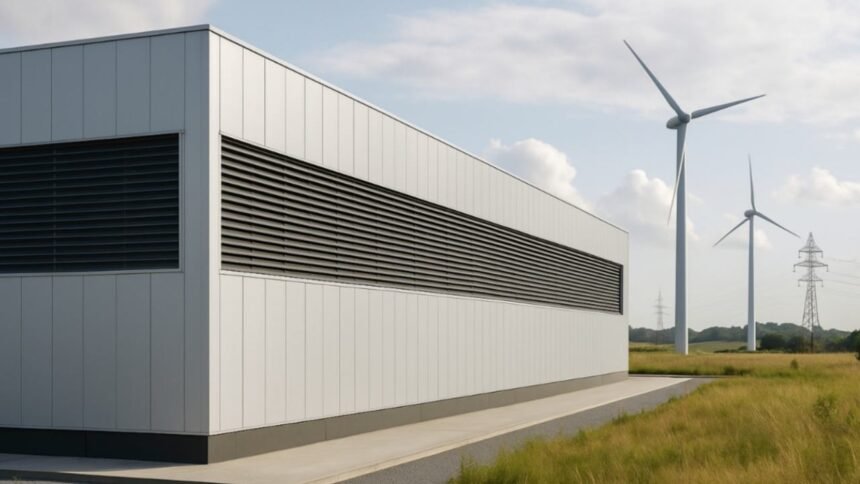
The company has signed a letter of intent with Argentina-based Sur Energy for a massive infrastructure project, a data-center facility worth up to $25 billion that could become one of the largest in Latin America.
If completed, the initiative, nicknamed “Stargate Argentina”, will deliver as much as 500 megawatts of AI computing power, enough to train the next generation of language models. For a company that already runs ChatGPT for more than 800 million weekly users, this marks a new phase in OpenAI’s growth: expanding from software to global infrastructure.
Why Argentina?
Argentina may not sound like the obvious tech destination, yet its combination of renewable-energy potential, open industrial land, and new investment incentives makes it a strategic choice.
Under the country’s RIGI tax-break program, large-scale projects receive extended financial benefits for technology and energy investments. For OpenAI, that means lower costs, flexible regulation, and proximity to South America’s emerging clean-power grid.
Sur Energy, a regional power player, brings expertise in large-scale renewable projects, exactly what a modern AI operation demands. Together, they plan to build a hybrid site capable of balancing energy output with AI server requirements, an idea that could define future data-center design.
Also Read: Sam Altman Says He’s Jealous of Today’s Dropouts — Here’s Why.
The Energy Behind Intelligence
Modern AI isn’t just about algorithms, it’s about electricity.
Each new generation of GPT models consumes exponentially more compute power, and the cost of energy has become the silent constraint on AI growth.
By partnering with energy companies rather than just cloud providers, OpenAI signals a strategic shift: controlling its power supply is now as important as improving its models.
Industry observers call this AI’s infrastructure moment, the point where companies like OpenAI start building the physical backbone for artificial intelligence worldwide.
Also Read: ChatGPT 6 Release Date – What We Know So Far.
A Global Signal
The Argentina project is only the beginning. OpenAI CEO Sam Altman hinted that Stargate Argentina will be “the first in Latin America, a region full of talent, creativity, and ambition.”
That wording suggests more global sites may follow, creating a distributed network of AI-power hubs across continents.
Such expansion mirrors what major players like Microsoft and Google are already doing with their next-generation data-center campuses. The AI boom is no longer just about chatbots, it’s about who can supply the electricity and computing muscle to power them.
If successful, the Stargate Argentina project could become one of the most ambitious technology-energy collaborations ever attempted in the region.
For Argentina, it’s a milestone investment that aligns with its push to attract global tech capital.
For OpenAI, it’s proof that artificial intelligence is evolving from a product to a global ecosystem, one where data, energy, and geography all play equal roles.
As the world debates regulation, the real race may already be underway, a race to decide where intelligence lives.
Also Read: Modi’s Qualcomm Meeting Hints at a Bigger AI Push.