
OpenAI didn’t announce Sora with a flashy keynote or marketing campaign.
It simply appeared, a minimal app, a short demo video, and a single promise: “Turn text into video.”
Within hours, creators across X, Instagram, and Reddit were calling it the “ChatGPT moment for video.”
But the more people explored it, the clearer it became that Sora wasn’t just another AI toy.
It marked a shift, from AI that talks to AI that creates.
Trying Out Sora: What It Actually Feels Like
If you’ve seen the clips online, you might wonder, is Sora really that simple to use?
The interface opens to a clean text box with a single instruction: “Describe what you want to see.”
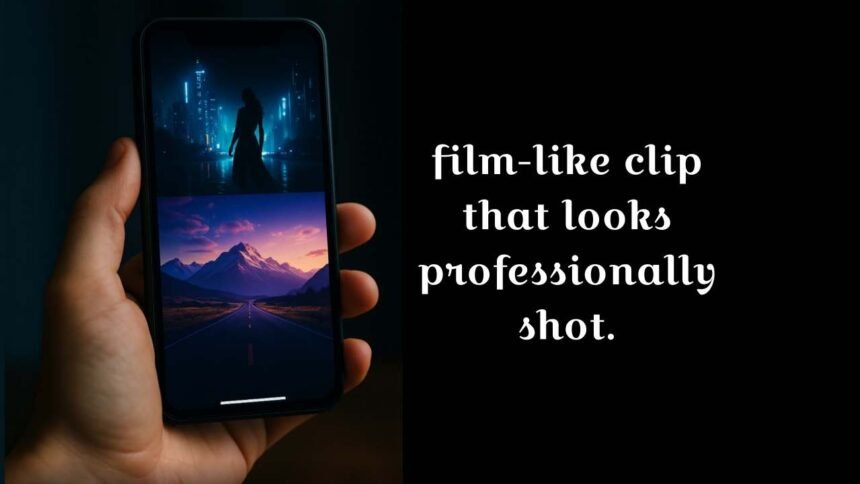
Type a line like “a sunrise over snow-covered mountains” and within seconds Sora transforms that sentence into a film-like clip that looks professionally shot.
There’s no camera setup, no timeline, no editing software. Just type, wait, and watch as AI builds a scene that feels almost hand-crafted.
The more precise your prompt, the more cinematic the result.
Using Sora feels less like editing a video and more like co-directing with artificial intelligence.
It’s a rare moment in tech where complex AI feels as natural as imagination itself, a creative tool that lets anyone think visually without learning video production.
Also Read: OpenAI’s Unstoppable Rise — How Sam Altman Is Quietly Rewriting Silicon Valley’s Rulebook.
The Future of Storytelling
Sora works on a deceptively simple principle: you type what you imagine, and the AI turns it into a moving scene.
No cameras. No editors. No production software. Just your words.
Behind the interface, OpenAI’s model handles everything, lighting, movement, framing, even cinematic transitions.
A single line like “a rainy street in Tokyo filmed from a drone” instantly becomes a 10-second clip that looks professionally shot.
In a sense, Sora is not a social app, it’s a creative instrument disguised as one.
Avatars That Think, Move, and Learn
Then there are the “Cameos.”
These aren’t just animated avatars, they’re adaptive digital doubles trained to mirror your gestures, tone, and micro-expressions.
Each user can decide how their avatar behaves: private, shared only with followers, or public for collaboration.
For artists and filmmakers, it’s a way to stay on screen without being on set.
For privacy advocates, it’s a fascinating, and slightly unsettling, glimpse into what “identity” means in an AI-driven world.
More Than an App — A Creative Ecosystem
Sora doesn’t just generate content, it redefines how content is discovered.
Your feed isn’t filled with human uploads but with ideas turned into videos.
You scroll through scenes born from prompts, remixes, and AI-human collaborations.
It’s not about likes or trends anymore, it’s about imagination.
Every clip is a story no one had to film, and that makes it revolutionary.
What Happens Next?
If ChatGPT gave AI the ability to write, Sora gives it the ability to visualize thought.
It turns imagination into motion, instantly, with precision that once took studios days.
But a bigger question emerges: when anyone can create realistic video in seconds, how will we define originality?
For now, Sora feels like a peek into that future, beautiful, slightly eerie, and undeniably transformative.
It’s not just changing how creators work it’s quietly changing what “creation” means.
Also Read: Why Investors Are Suddenly Targeting Smart Security — Inside ADT’s Big UK Deal.