
A Record-Breaking Start
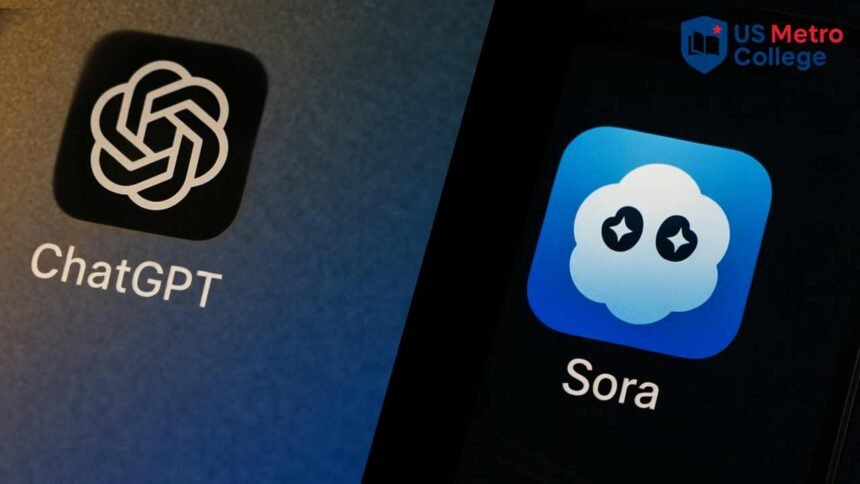
OpenAI’s new AI video app Sora has achieved something even ChatGPT didn’t at its debut, it outpaced one of the fastest-growing app launches in U.S. history.
According to Appfigures data, Sora recorded nearly 627,000 iOS downloads in its first week, slightly higher than ChatGPT’s 606,000 during its seven-day debut back in 2023.
What makes this feat remarkable is that Sora is still invite-only, available only in the U.S. and Canada. Despite the limited rollout, its adoption rate nearly matches ChatGPT’s early global buzz, proving that scarcity can sometimes fuel even more hype.
Why This Launch Feels Different
Unlike text-based chat apps, Sora offers something far more visual and far more emotional.
Within days of launch, Sora videos began flooding social media feeds, showing hyper-realistic AI clips created from short prompts. From dreamlike sceneries to eerie “deepfakes” of real people, the internet couldn’t look away.
The surge pushed Sora to the No. 1 spot on the U.S. App Store within five days, surpassing other AI heavyweights like Anthropic’s Claude, Microsoft Copilot, and xAI’s Grok. Even with daily installs fluctuating between 84 K and 107 K, the app’s momentum hasn’t slowed.
Deepfakes and Digital Curiosity
The appeal of Sora isn’t just novelty, it’s curiosity.
People are fascinated by how real AI-generated videos now look. But that same realism is raising new questions about misinformation and ethics.
Some creators and families, including actor Robin Williams’ daughter Zelda Williams, have expressed concern after seeing Sora-generated deepfakes of deceased public figures circulate online. It’s a reminder that every breakthrough in AI creativity comes with its own set of risks.
Still, controversy hasn’t stopped Sora’s growth, it has amplified it. Users are downloading the app not only to create but to understand the future that’s suddenly here.
What’s Next for AI Apps
For OpenAI, Sora’s debut signals something much larger than app success, it marks the beginning of the AI video era.
Just as ChatGPT changed how people write and learn, Sora is changing how people see and imagine. The shift from words to moving visuals could redefine storytelling, entertainment, and even personal memory.
If Sora can go viral before it’s even publicly available, what happens when OpenAI finally opens the gates?
This might just be the trailer, and the real movie is yet to begin.
Also Read: Sam Altman’s Sora: Are AI Videos Getting Too Real for the Internet?.