
Waymo Robotaxi London Launch
London is about to become Waymo’s first European stage. Alphabet’s self-driving arm says it will begin on-road tests with safety specialists at the wheel and, pending regulatory approvals, open a robotaxi service next year. If you’ve watched the U.S. rollout in Phoenix, San Francisco, Los Angeles, Atlanta, and Austin, you know the playbook: patient testing, tight geofences, and a lot of data before paying rides scale. Now that playbook is crossing the Atlantic.
Also Read: Google’s Hidden Settings Let You Reduce AI in Gmail, Docs, and Search — Here’s Where to Find Them.
Why London, and why now?
Two tailwinds line up perfectly. First, the UK has signaled an “accelerated” path for autonomous pilots, courting AV investment with clearer rules of the road. Second, London has a Vision Zero goal to eliminate serious injuries and deaths by 2041—an agenda that welcomes data-driven safety claims from AV operators. Waymo, for its part, cites internal analyses of far fewer injury-causing collisions than human drivers and says it has notched 100 million fully autonomous miles and 10 million paid rides so far. Whether those numbers translate to London’s denser, more chaotic streets is the big real-world test.
What you’ll actually see on the road
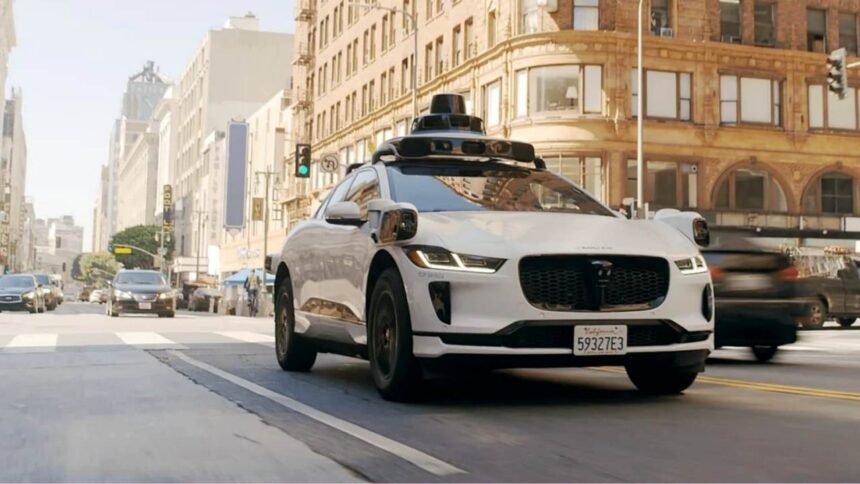
Expect Jaguar I-PACE electric SUVs wearing Waymo’s sensor halo—lidar, radar, and cameras—running limited routes at first. Operations and maintenance will be supported by Moove, which already services ride-hail fleets (charging, cleaning, light repairs). Early miles will be with human safety specialists in the driver’s seat while mapping, corner cases, and local behaviors are learned. Only when regulators and the company are satisfied will fully driverless rides begin.
The fine print on permissions
Waymo still needs a stack of approvals from local and national authorities, plus ongoing engagement with Transport for London and city leadership. Expect carefully defined service zones, capped speeds, and conservative behavior around cyclists, buses, and pedestrians. London’s street mix—narrow lanes, multi-modal traffic, complex junctions—will pressure-test autonomy in ways few U.S. cities can.
Winners, skeptics, and the competition
For late-night workers, tourists, and outer-borough commuters underserved by transit, a reliable robotaxi could be a quiet upgrade. For black cabs and private-hire drivers, it’s another competitor—though scale won’t be overnight. Meanwhile, Wayve, a UK startup backed by major tech investors, is pursuing a camera-centric approach (closer to Tesla’s philosophy) and has flagged its own London pilot plans. Different stacks, same streets.
How pricing and product might land
Waymo tends to launch with promo fares, then settle into app-based pricing comparable to ride-hail for similar distances. Expect geofenced zones, virtual pickup points, and highly transparent ETAs as the service matures. In the background, every tricky merge and near-miss becomes training data—fuel for expanding hours and neighborhoods.
What to watch next
- Safety-driver testing sightings on defined corridors (likely EV-friendly routes with strong mapping).
- Public dashboards or briefings on disengagements and incidents—key for trust.
- Accessibility commitments, like wheelchair-friendly options and integration with TfL journey planning.
- Service expansion beyond a small nucleus once performance is stable.
London doesn’t hand out “ready for the future” badges lightly. If Waymo can prove its U.S. confidence holds on British roads—with dense traffic, cyclists everywhere, and weather that loves to meddle—it won’t just be its European debut. It’ll be a signal that robotaxis can adapt, city by city, to the way people actually move.
Also Read: Google’s Gemini Can Now Schedule Your Meetings — Straight From Gmail.